
 Коммуникации и Сети
 Телекоммуникации и связь
 Микроэлектроника
 Электронные схемы
 Биомедицина
 Промышленное управление
 Электрические машины и Силовая электроника
 Холодильная техника / Кондиционирование воздуха
 Автоматическое управление
 Автомобильные системы
 Зеленая энергия
 Измерительные приборы
 Электронные тренажеры / макетные платы
 Серия электронного конструктора fayalab
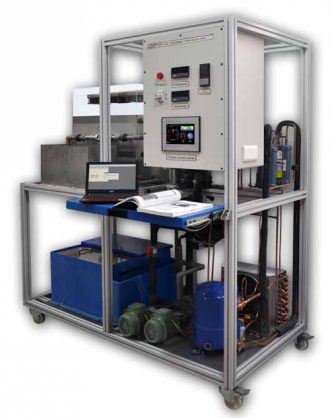
1. Practice the cooling water calculate
Use the Refrigeration capacity calculate the required amount of cooling water, and learning how to pick the water pump
2. Practice the chilled water calculate
Use assuming the load to calculate how much brine volume computing needs
3. Practice the Refrigeration capacity calculate
Provided by using the discharge capacity of compressor to calculate refrigeration capacity And compared to the actual
measurements
4. Brine concentration adjustment experiments
Adjust the brine concentration to make the sink temperature changes and observe the effects
5. Practice the Condenser capacity Calculate
Use Mollier Chart Calculate capacity for condenser and capacity match Calculate with cooling towers
6. The rate of change of the ice making experiments
Changing the brine flow and adjust the size of the ice then observe the effects
7. Cooling tower capacity test
By changing the cooling tower fan speed change cooling capacity and observe the high pressure, water temperature
and other temperature changes
8. Evaporator capacity test
Adjusting the temperature of the evaporator refrigerant pressure observed changes affect
9. Compressor capacity test
Adjusting the temperature of the evaporator refrigerant pressure changes observed changes in output power
10. Troubleshooting
Adjusting the Refrigerant pressure or protection switch to simulation fault, and then students practice excluded the fault
1. Modern mini ice plant system, an ideal solution to understand the different freezing methods(ex: ice transparency) relative to industrial level. (Air compressor is optional and locally prepared)
2. Study the brine cycle refrigeration operation.
3. Study Variable factors of Brines concentration adjustment and its influence to different frozen objects.
4. Study the components structure and principles of ice-making system.
5. Industrial way of ice making, KR-112 is able to produce real ice maximum 40 * 20 * 20cm
6. Water cooling by self-designed transparent cooling tower which can provide different fan speed to simulate and observe the effect of heat rejection caused by environment variation.
7. System operation by traditional switch and Human Machine Interface control. PLC control is an optional alternative.